After a real breakup some people drink, some disappear into the gym, some sink into depression.
I found a different way to switch my head off.
After my divorce I closed my heart for four years.
I did not let a single woman inside. There were random encounters — sex, nights that meant nothing, meetings in parks or at parties — but my heart stayed locked. I could look at women, I could even spend time with them, but I never opened the door. I had decided that if a woman entered my life again, she would eventually destroy it. So I kept everything at a safe distance.
Four years passed like that.
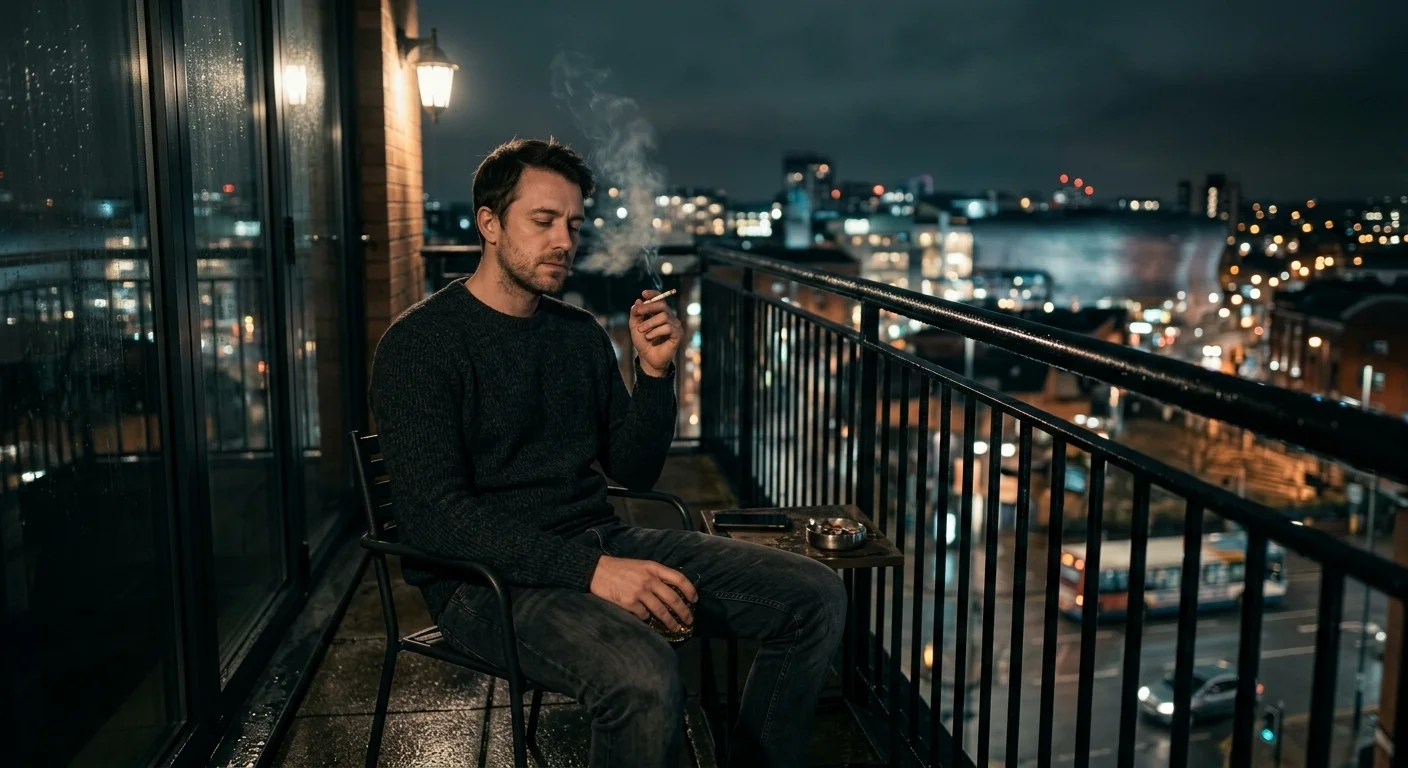
One evening I stepped out onto a balcony to smoke at a friend’s place. She came out a minute later. We started talking. Nothing dramatic. Just a conversation. But something in my chest opened without my permission. I remember standing there thinking: what is happening to me? I had spent four years protecting myself, and in less than half an hour the walls were already shaking.
The first three months felt like someone had turned the colour back on.
I was happy in a way I had forgotten was possible. I started questioning whether I had ever truly loved my ex-wife, or whether enough time had simply passed for me to feel something real again. This time I tried to do everything differently. We talked. When there was even a small discomfort, I would ask: “Are we okay?” She would say yes. I told her clearly that I would not allow a woman to hurt me the way it had happened before. If something changed, she needed to say it. We lived like that for a year. I put a lot into it — time, energy, plans, the version of myself I was trying to become.
Then the small things began to disappear.
She stopped taking my hand. The distance grew quietly. One evening I asked the same question I always asked: “Are we okay?”
She looked at me and said:
“Do you even know what love is?”
I answered honestly. I told her that when I looked at her — even when she was working, even when she was simply moving around the apartment — my heart still stopped for a second.
She replied: “I don’t feel that.”
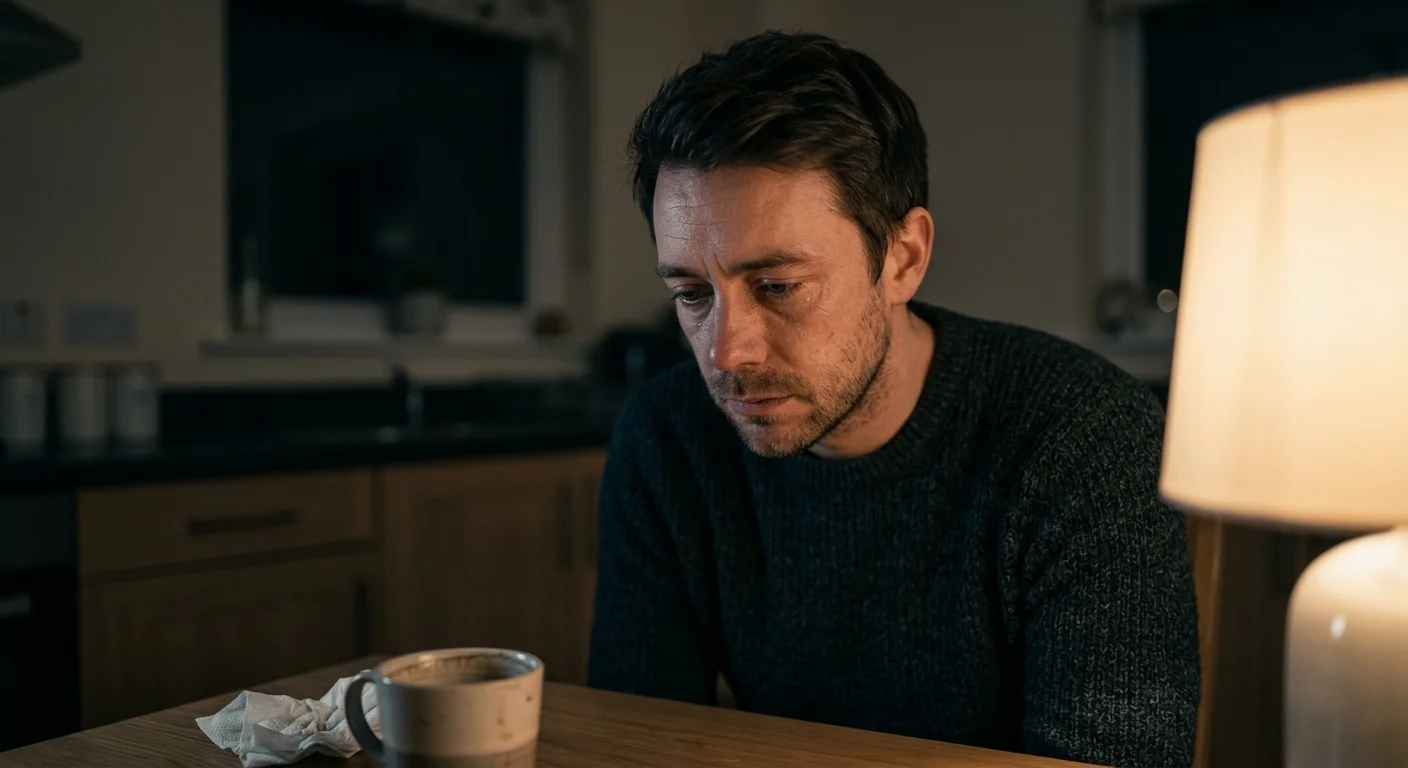
Then she hugged me and said everything would be fine.
That was the moment something inside me tore. Because she had been looking me in the eyes for weeks and saying we were okay while she already felt nothing. That quiet lying hurt more than the breakup itself. I can understand that love fades. What I could not understand was sitting across from someone, asking a direct question, and receiving a performance instead of the truth.
A few weeks after we separated she started listing the things she had never liked.
She did not like cooking the way I did. She did not like the sports I tried to share with her. We had different taste in music. At thirty-five I was talking about responsibility, about eventually building something stable, about the fact that money does not print itself. None of it landed. It was like talking to a wall. Every new sentence after the separation only drove the knife deeper.
The first days I drank hard.
Then I stopped, because I knew exactly where that road led. I do not use drugs. I did not want to destroy myself. But the pain stayed. I understood that love passes. I also understood that she had seen how hard I tried. That made it worse.
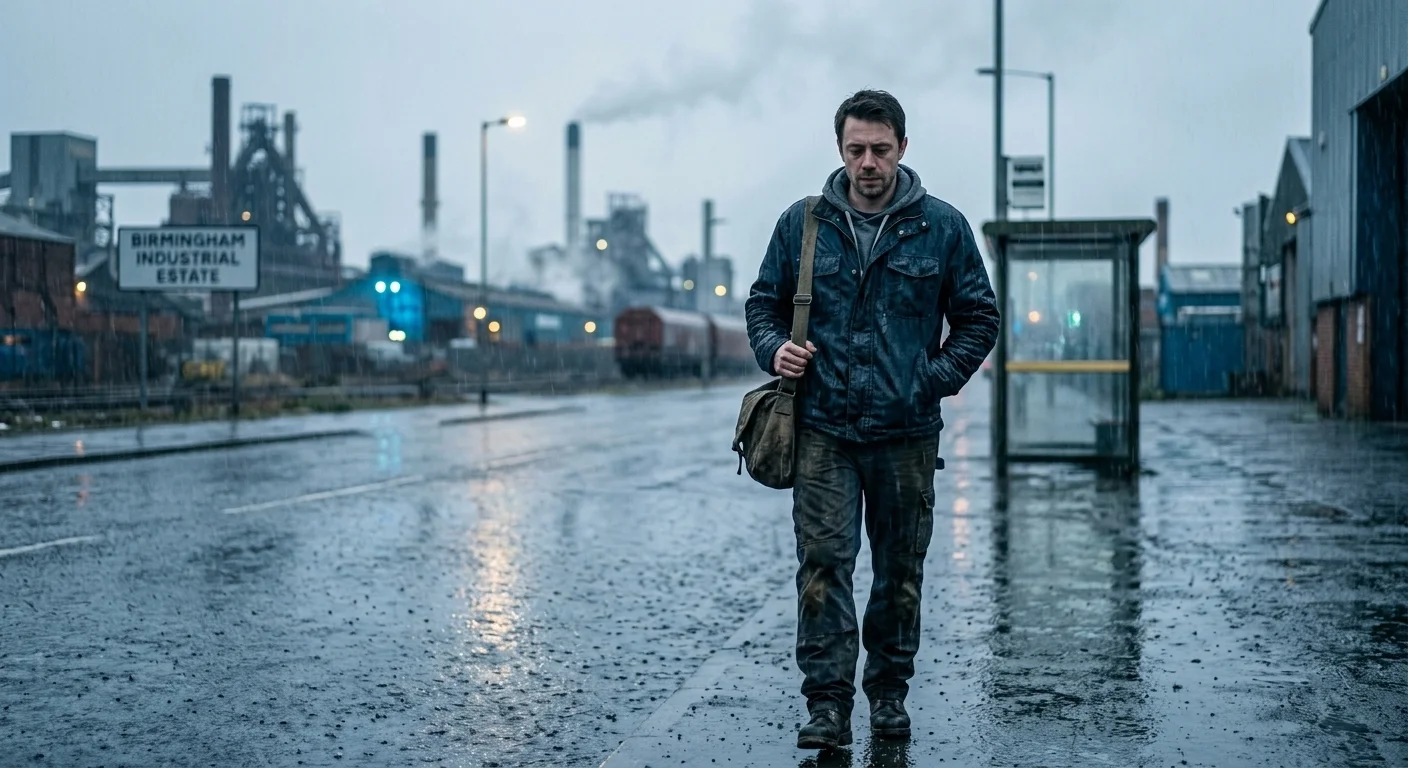
I took a factory job with rotating shifts.
Some weeks I started at six in the morning, some weeks at two in the afternoon. I hated it. Autumn came with constant rain. I would wake up in the dark, put on clothes that already smelled like the place, and walk through wet streets toward a job I despised. The salary was terrible. I have no rich parents. There was no safety net. The body learned the movements quickly — the same actions repeated for hours. But the head stayed free, and the head always returned to her. To the balcony. To the sentence “I don’t feel that.” To the feeling of having been slowly lied to while I was still asking if we were okay.
Nights were the worst.
Insomnia. The kind where the same scenes play on a loop and you cannot make them stop. I tried everything I could think of. I went to a psychologist. I did talk therapy. I spoke with friends. I watched hours of YouTube videos about heartbreak and recovery. I even put on melodramas and series late at night hoping something would distract me. Nothing really worked. The psychologist said what they always say: time is needed. I understood that. But I still had to survive the hours between evening and morning without sliding into something darker.
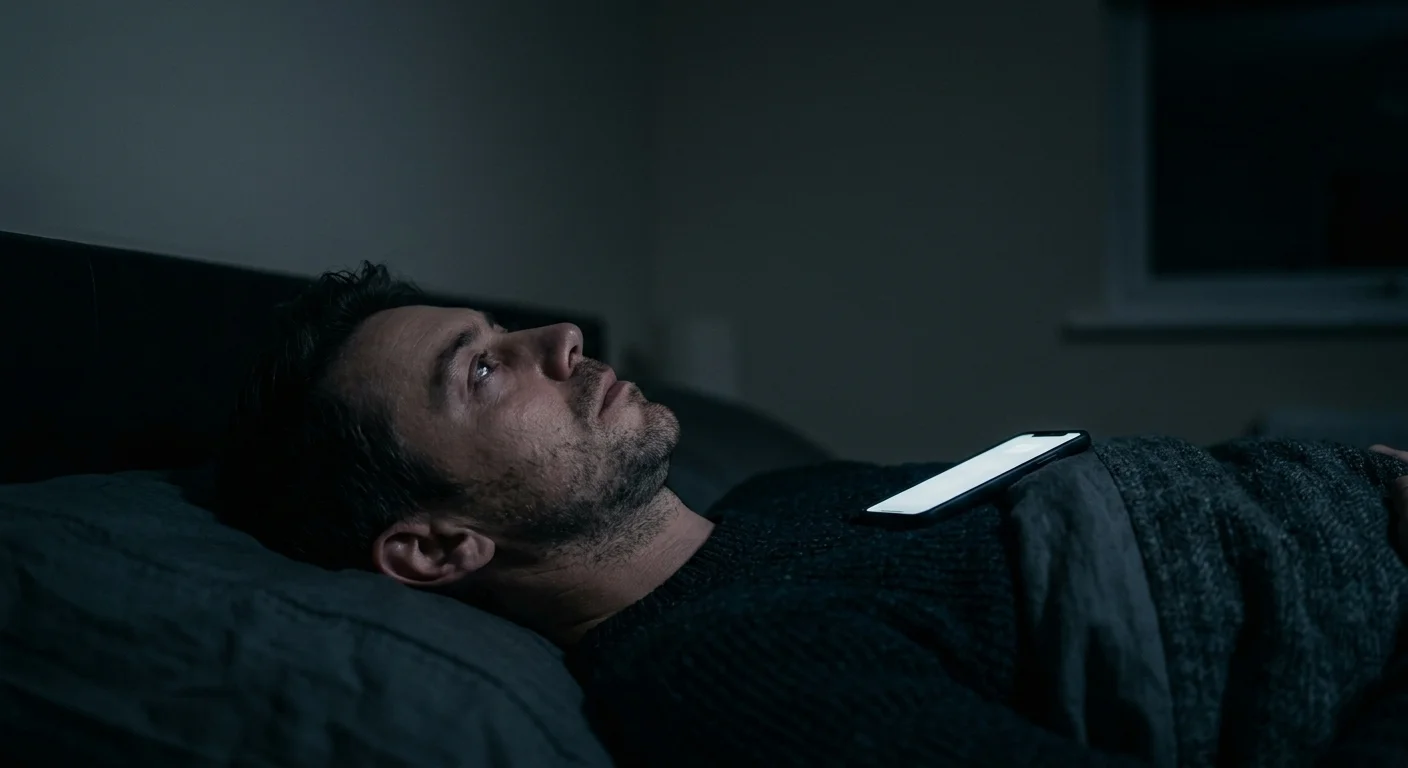
I could feel the edge of depression approaching.
I needed my brain to switch off for a while. Not to be understood. Not to be comforted. Just to stop replaying the same betrayal for a few hours.
I started reading stories in closed groups where men wrote about what happened after their relationships ended. A lot of anger. A lot of pain. Some drank. Some threw themselves into sport. Some disappeared into work. I was not looking for people to agree with me. I was looking for any method that had actually helped someone turn their head off.
One man wrote a longer post. His situation was heavier than mine — divorce, two children, a complete collapse. He said that at some point he began using crypto gambling simply as a way to occupy his mind. He had never played before. He did not explain strategies. He did not promise money. He only said that for the first time in months his thoughts quieted down for several hours while he played, and that small moments of focus started to matter more than he expected.
At that time I was already deep into trying to understand myself.
So I asked a simple question: why not try?
I approached it carefully.
The first platforms felt foreign and uncomfortable. Some had problems with wallets. Some had interfaces that made no sense. Some limited me quickly. I kept looking until I found one that simply worked without constant friction. I deposited a sum I had decided in advance I could afford to lose. I treated it the same way I used to treat the cost of a long night of drinking — money spent on a change of state, not on a plan to get rich.
I played for several hours.
For the first time in a long time my mind stayed on what was in front of me instead of returning to her. When I closed the laptop I was tired in a normal way. That night I slept.
More than two years have passed since then.
Life moved forward. Time does what people always say it does. During this period I tried two other relationships. I still do not open my heart completely. I learned to value my own mind and my own peace. I now believe a woman should also fight for me, not only the other way around. I protect myself differently.
I am still grateful for that post I read in the group.
It sounds strange to some people — using crypto gambling as a form of mental relief. But anyone who has truly loved and then lost will understand. You remember those nights. The ones where you drank, or cried, or sank into depression, or stopped caring about work, or argued with everyone around you, or wanted to disappear. You remember how badly you needed something — anything — that could turn the volume down in your head for a few hours.
That is what it gave me.
Not a solution. Not a cure. Just a way to switch the brain off when nothing else worked.
I learned to stop when I am losing.
I know what gambling is. I am not naïve. For myself I call it training. When I feel that I am going down, a voice inside still says “one more time.” I answer “no.” In the beginning I had to sit with that refusal the same way you sit in a therapy session — uncomfortable, honest, without escape. The ability to endure that moment turned out to be useful far beyond any game. Life constantly asks us to endure things we do not want to feel. This became one of the places where I practised it.
The next day, or a couple of days later, when the desire to play returned, I started using a small personal rule. I would ask myself: how much more did I want to play on the day I stopped? Let’s say it was another fifty. Then I added whatever amount I was willing to spend that new day — another fifty, for example. I played with the combined sum. I called it encouragement. Strangely enough, it worked for me. Sometimes I won. Sometimes I lost. But the important part was no longer only the money. It was the feeling of winning over myself — the moment when the impulse said “continue” and I still chose the boundary I had set.

I still use it on certain days.
When it rains. When I do not want to see anyone. When the old noise tries to come back. I do not treat it as a way to earn. I treat it as one of the tools that helps me stay clear. I can go and clean the apartment. I can watch a boring film. Or I can sit down for a limited session and let my attention stay in one place for a while.
Of course, like in the movies, there is always a small stupid part of the mind that imagines the day when a huge win appears and suddenly there is a helicopter, a big house, and no more need to work.
We all know the real chances of that are tiny. But we also know something else: if you never try, the answer is always no. If you never ask, the answer is also always no. Everyone understands this in their own life.
I am writing this while remaining anonymous for a simple reason.
Once, when I was looking for any honest way to survive the worst period, almost nothing helped. This did. For some people it is sport. For some it is drinking. For some it is work, or music, or computer games, or writing. I tried most of those. This is the one that actually quieted my head when I needed it most. Everyone has a different path.
The platform I still use is the one that required the least fighting from the beginning.
No affiliate link. I do not get bonuses for anyone who decides to look. I am simply leaving this here because sometimes a stranger on the internet can turn out to be closer than friends, family, or anyone else in the moment when you are drowning.
Most prelanders fire CompleteRegistration or Lead on button click. This teaches the algorithm to optimize for clicks instead of real registrations and FTDs.
We do it differently. The only events that go back to the ad platform are real Registration and First Deposit postbacks from the offer. This is why the optimization stays clean.